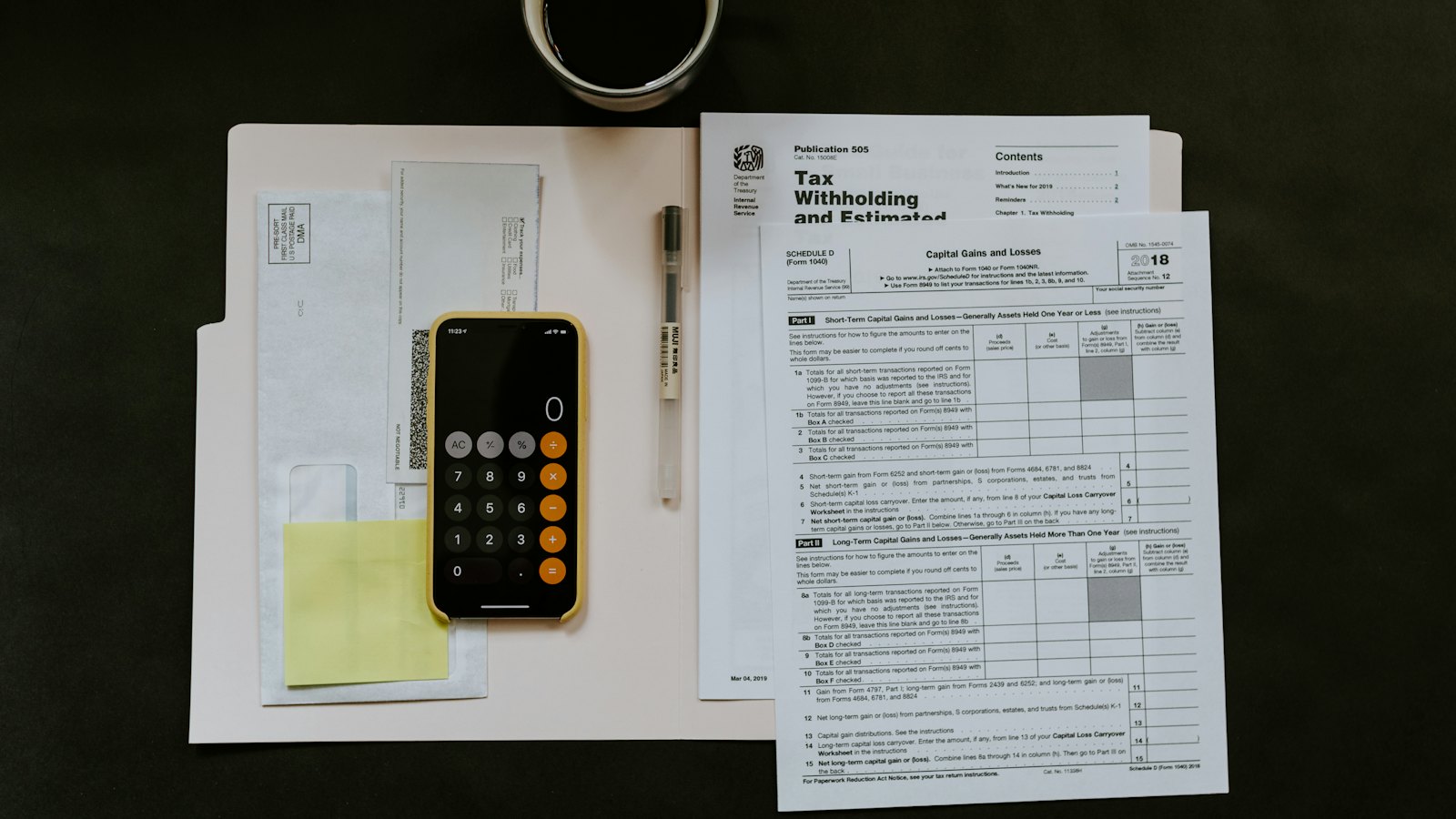
A short-term rental loss reaches your wages through a short chain of forms: it is computed on Schedule E, classified as passive or non-passive under IRC §469, routed through Form 8582 if passive, and lands on Schedule 1 of Form 1040 where it is netted against other income. The hours question decides the routing. If you materially participated in an STR whose average stay is seven days or less, the loss generally bypasses Form 8582 and offsets ordinary income, subject to other limits. If you did not, Form 8582 holds it back. Nothing on the return asks how many hours you worked; the log sits behind the return, and it only comes out if someone asks.
The path, form by form
Here is the route a directly owned STR loss takes on an individual return. Entity-owned properties add a K-1 step but end in the same place.
- Schedule E, Part I. Rents received, expenses, and depreciation for each property produce a per-property income or loss. Schedule E asks for fair rental days and personal-use days; it does not ask for hours.
- Passive or non-passive. This classification happens off the form, under IRC §469 and its regulations. For an STR, the questions are the seven-day average stay under Treas. Reg. §1.469-1T(e)(3) and material participation under Treas. Reg. §1.469-5T. See the STR loophole guide for both.
- Form 8582, or not. Passive losses go through Form 8582, which computes how much is allowed this year and how much is suspended. A loss from a non-passive activity generally is not entered on Form 8582 at all.
- Schedule 1, then Form 1040. The allowed Schedule E total flows to Schedule 1 and then to Form 1040, where it is netted against wages and other income before the tax is computed.
The hours therefore never appear on any line. What appears is the consequence of them: a loss that is either on the 1040 or parked on Form 8582.
Where the hours question is asked
IRS Publication 925 describes the seven material participation tests and the rental-activity exceptions. The preparer applies them using facts you supply: the average stay for the year, your hours in the activity, and the hours of everyone else who worked on the property.
A CPA cannot verify those facts from the return. They rely on the log and the booking data, and a careful preparer will ask for both before treating a loss as non-passive. The STR tax hours guide explains which tests most hosts realistically meet and what has to be true for each.
A stylized example
The figures below are fictional and rounded, chosen only to show the routing. They are not a projection, and the tax effect for any real household depends on facts this example ignores.
Suppose a couple has W-2 wages of $240,000. They bought a cabin, placed it in service in the spring, and had a cost segregation study done. For the year:
| Schedule E line (fictional) | Amount |
|---|---|
| Rents received | $38,000 |
| Operating expenses (cleaning, supplies, utilities, platform fees, insurance) | $19,000 |
| Depreciation, including bonus depreciation on segregated components | $95,000 |
| Net loss | ($76,000) |
Now two versions of the same year.
Version A: non-passive. The average stay was four nights. The owner logged 142 hours of operational work with dated entries, and the cleaner's invoices support about 90 hours. Material participation under the 100-hour test is documented. The $76,000 loss is not entered on Form 8582. It flows through Schedule 1 to Form 1040, where it is netted against the $240,000 of wages, subject to the limits in the next section.
Version B: passive. Same numbers, but the owner has a reconstructed summary of "about 150 hours" with no dates and no record of the cleaner's time. The preparer, unable to support material participation, treats the activity as passive. The $76,000 loss goes on Form 8582. Because the couple's modified adjusted gross income is above the phase-out range for the $25,000 allowance under IRC §469(i), the allowed amount is likely zero. The full loss is suspended and carried forward.
Same property, same expenses, same depreciation. The difference between the two versions is the record.
Non-passive is not the end of the road
A loss that escapes IRC §469 still has to clear other limits, and a preparer will check each in order:
- Basis. For property held through a partnership or S corporation, losses are limited to your basis in the entity. Directly owned property has a simpler basis picture, but it still governs depreciation.
- At-risk rules (IRC §465). Losses are limited to amounts you have at risk in the activity, computed on Form 6198 when it applies. Certain nonrecourse financing complicates this.
- Excess business loss (IRC §461(l)). Net business losses above an indexed threshold are disallowed for the year and carried forward as a net operating loss. This is computed on Form 461 and applies after the passive-loss rules. Check the current threshold in the Form 461 instructions on irs.gov.
- Personal use (IRC §280A). If you used the property personally for more than the greater of 14 days or 10 percent of rental days, the loss itself is limited before any of the above.
In the fictional Version A, the $76,000 might be reduced by one of these before it reaches wages. That is why "the loss offsets W-2 income" is always a conditional statement.
What "suspended" means if you fail
A passive loss that Form 8582 does not allow is not lost. It carries forward and can be used against passive income in later years, or generally in full when you dispose of the entire activity in a taxable transaction to an unrelated party.
Two consequences for STR owners. First, a failed year does not erase the deduction; it delays it, sometimes for a long time. Second, the suspended loss does not free itself up later because you materially participate in a subsequent year; it is released by passive income or disposition, not by future hours.
The records the return does not ask for
Nothing on Schedule E, Form 8582, or Form 1040 collects the following, and every one of them is what an examiner asks for first when a non-passive STR loss is questioned:
- A dated hours log with specific tasks and durations for each property.
- The booking list used to compute the average stay: number of stays and total nights, including direct bookings.
- Hours of every other individual who worked on the property, so the "more than anyone else" comparison can be made.
- Personal-use days and how they were counted.
- Receipts, photos and messages that corroborate the larger entries.
STR Tracker's per-property export is built to be that package: the log, the totals, and the other participants' hours in one dated PDF a preparer can put behind the return. The point is not that a form requires it. The point is that the non-passive position rests on it.
Questions for your preparer
Before the return is filed, it is reasonable to ask:
- Which material participation test are you relying on for this property, and does my log support it?
- What average stay did you compute, and from which booking data?
- Did any hours get excluded as investor time, on-call time, or travel?
- Is the loss limited by basis, at-risk, or the excess business loss rules this year?
- If the loss is passive, how much is suspended, and what would release it?
If your preparer wants to see the log before answering, that is a good sign. The for CPAs page describes the export format they can request.