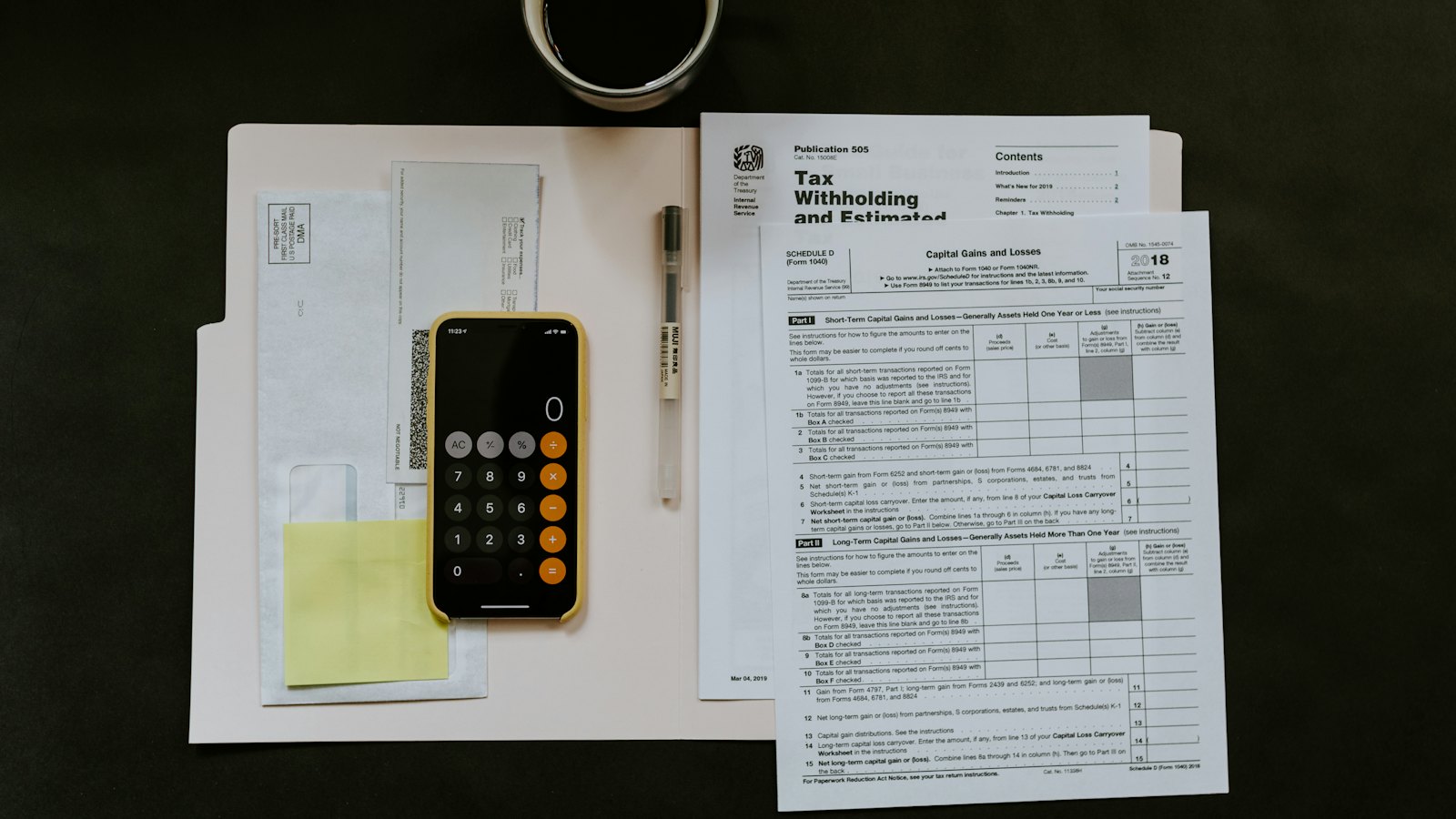
Most short-term rentals are reported on Schedule E, because the owner provides the customary services of a landlord — a clean unit, linens, utilities, wifi — and nothing more. A rental where the owner provides substantial services primarily for the guest's convenience, such as daily cleaning, meals or concierge help, is generally reported on Schedule C and is generally subject to self-employment tax. The line is not sharply drawn for short-term rentals, and preparers disagree at the margins. What follows is the framework, not a recommendation.
Two questions people run together
Owners searching this topic are usually mixing two separate analyses:
- Is the activity passive? That is a §469 question, answered by the seven-day average stay rule in Treas. Reg. §1.469-1T(e)(3) and the material participation tests in §1.469-5T. It decides whether a loss can offset other income.
- Where is it reported, and is it subject to self-employment tax? That is a question about whether the activity is a rental of real estate or a service business, answered by the level of services provided. It decides the schedule and whether the net income is earnings from self-employment.
The two use similar words — "services," "short-term," "business" — and reach independent conclusions. A property can be non-passive under §469 and still belong on Schedule E. A property can be on Schedule C and still be passive if the owner does not materially participate.
What "substantial services" means
IRS Publication 527 describes the distinction in plain terms. If you provide substantial services that are primarily for the tenant's convenience, such as regular cleaning, changing linen or maid service during the stay, you report the rental income and expenses on Schedule C. Substantial services do not include furnishing heat and light, cleaning of public areas, trash collection and similar things a landlord ordinarily does.
For a short-term rental, the practical sorting looks like this:
| Customary for a rental (Schedule E territory) | Substantial services (Schedule C territory) |
|---|---|
| Cleaning between guests | Daily housekeeping during the stay |
| Fresh linens and towels at check-in | Meals, breakfast, stocked groceries as a service |
| Utilities, wifi, streaming | Concierge, tours, transportation |
| Self check-in, a house manual | Staffed reception, on-call personal assistance |
| Responding to a broken appliance | Turndown, laundry service during the stay |
The gray zone is real. A welcome basket is not a meal service. A mid-stay clean on a ten-night booking is closer to hotel service than a turnover is. Preparers weigh the whole pattern, not one item, and reasonable ones reach different conclusions on the same facts.
Schedule E without substantial services
This is where most hosts land: the property is rented furnished, cleaned between stays, and left alone while the guest is there. Income and expenses go on Schedule E, depreciation goes on Form 4562, and net rental income is not earnings from self-employment. Whether a loss is passive is then decided separately under §469, and that is where the hours log does its work. The short-term rental tax hours guide covers that side.
Schedule C with services, and the trade-off
Where substantial services are provided, the activity looks like a business, is reported on Schedule C, and its net profit generally flows to Schedule SE. The trade-off is straightforward to describe and harder to evaluate:
- In loss years, the schedule may matter less for the deduction itself, since a non-passive loss is a non-passive loss either way.
- In profit years, Schedule C income is generally subject to self-employment tax, which Schedule E rental income is not.
- Other provisions — the qualified business income deduction, retirement plan contributions, certain state treatments — interact with the choice in ways that depend on the whole return.
None of that is a reason to pick a schedule. The services you actually provided decide it; the schedule follows the facts.
Why the seven-day test is not a Schedule question
A persistent myth says that a rental with average stays of seven days or less "is a business" and therefore belongs on Schedule C. That conflates the two analyses. Treas. Reg. §1.469-1T(e)(3) removes a short-average-stay activity from the definition of "rental activity" for purposes of §469 only. Publication 925 explains this in its discussion of activities that are not rental activities. It says nothing about which schedule to use or about self-employment tax.
The confusion runs the other way too: the second §469 exception, for average stays of 30 days or less with significant personal services, uses service language that resembles the Schedule C test. They are still different rules for different purposes, and the seven-day average stay guide keeps the §469 side separate.
What this means for your hours log
Nothing changes. Whichever schedule the property lands on, the loss is passive unless you materially participate, and the proof is the same: dated entries, specific tasks, actual minutes, other participants' hours, and the stays-and-nights record for the average-stay computation. STR Tracker's per-property export is schedule-agnostic; the preparer attaches it to the workpapers for either form.
If anything, a Schedule C position raises the bar slightly, because the services that put the activity there are themselves work that should appear in the log. A host claiming daily housekeeping as a substantial service but logging no housekeeping hours has a record that argues with itself.
Ask your preparer these three questions
- Which services did we actually provide during stays this year, and which side of the Publication 527 line do they fall on? Bring the listing, the house manual and the cleaning schedule.
- If it is Schedule C, what is the self-employment tax effect in a profit year, and does that change how we structure services next year? The answer belongs to the preparer, not a forum thread.
- Separately, does the property pass the seven-day average and the material participation test, and does the log support it? Two different analyses, both needed.
Preparers who handle short-term rentals regularly ask these unprompted. If yours has not, the CPA resource page describes the records they will want to see before answering.